


Is it possible to combine alcohol and antibiotics?Even doctors do not give a clear answer to this popular question.While some are adamantly against such duos, others believe it's important to consider what alcohol and how much you're drinking.There is a third idea that you can be successfully treated while maintaining social activity by approaching the problem intelligently.
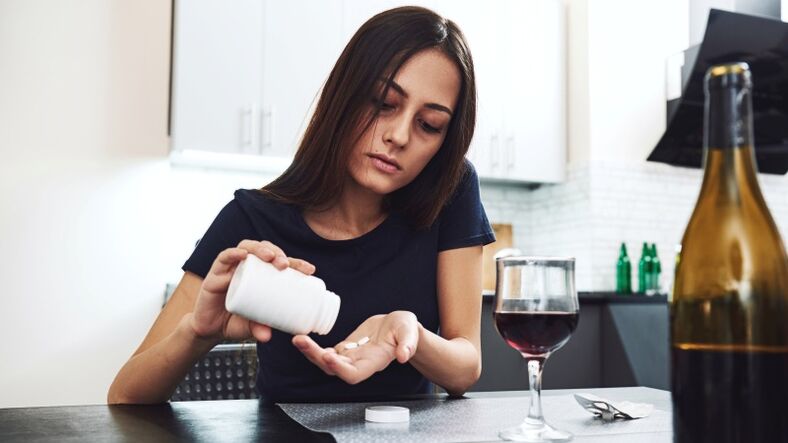
Is it really necessary to give up alcohol along with a course of antibiotics?Let's figure it out.
Much depends on the active ingredient of the drug.Some types of antibiotics are generally not friendly with alcohol, while others may interact normally.Of course, after reading this article, you should not confuse alcohol with pills.However, knowing some things will help you not to panic, but if for some reason you still drank alcohol during antibiotic therapy, it will help you understand the problem wisely.
Antibiotics and alcohol: myths and legends
There is a version that horror stories about the incompatibility of alcohol and antibiotics began to spread after the war.The first legend says that during this period venereological clinics in our country and abroad were simply overcrowded.Patients are soldiers and officers who have fully tasted the "taste" of martial law.Medical workers deliberately scared patients, talking about the terrible consequences of the combination of alcohol and antibiotics, because after drinking, patients can again commit all serious actions, and the result of such "exploits" can be a new sexually transmitted infection.
Another legend says that because penicillin was laborious to obtain, it evaporated from the urine of treated soldiers.For this reason, soldiers were forbidden to drink beer during treatment.
The danger of drinking alcohol while taking antibiotics is in the air, and modern people prefer to avoid such concoctions.But what does evidence-based medicine think about it?
What does the research say?
At the beginning of the 21st century, studies were conducted on the effect of ethanol on various types of antibiotics.Experiments on laboratory animals and human volunteers have shown that most types of antibiotics are not affected by alcohol intake.
Thus, the antibiotics studied in the experimental and control groups were equally effective.Significant deviations in the mechanisms of absorption, distribution or elimination of decay products in the body were not identified.
By the way, there is a hypothesis that drinking alcohol increases the negative effect of antibiotics on the liver.Such cases are rarely described in the medical literature (up to 10 in 100,000) due to their rarity.At the same time, no further research was conducted in this regard.Are all fears unfounded?
Which antibiotics cannot be combined with alcohol?
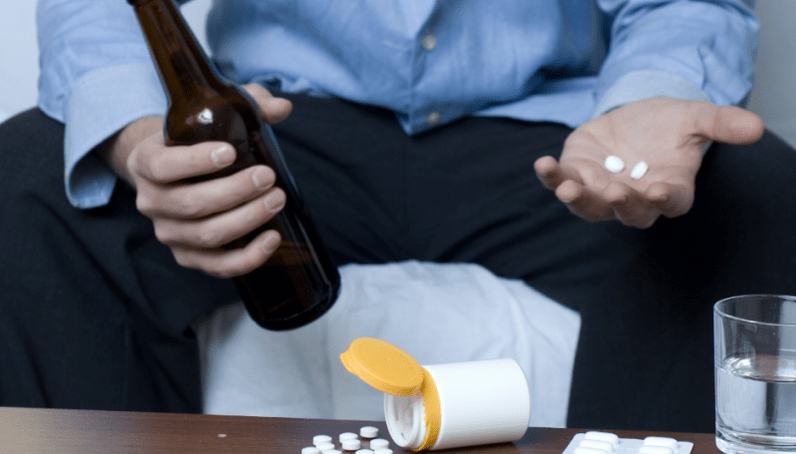
No, the fears are not unfounded: there are a number of antibiotics that, when in contact with alcohol, cause extremely unpleasant symptoms - the so-called disulfiram-like reaction.The reaction occurs when ethanol enters into a chemical reaction with certain specific antibiotic molecules, resulting in changes in the metabolism of ethyl alcohol in the body.In particular, the intermediate acetaldehyde accumulates.Intoxication with this substance gives the following symptoms:
- severe headache
- nausea and vomiting
- increased heart rate
- redness of the face, neck, chest area, "heat" in them
- intermittent heavy breathing
- spasms of the extremities
Large doses of alcohol can be fatal!
These symptoms are very difficult to bear, often leading to fear of suffocation or death.Disulfiram-like reaction is used in clinics to treat alcoholism ("coding").

Antibiotics that can cause the following symptoms:
- active ingredient metronidazole
- active ingredient ketoconazole (for example, prescribed for thrush in the form of a suppository)
- active ingredient furazolidone (prescribed for food poisoning or diarrhea of undetermined nature)
- active ingredient chloramphenicol (toxic, rarely used: for urinary tract, biliary tract infections and some other diseases)
- active ingredient co-trimoxazole (can be prescribed for infections of the respiratory tract, kidneys and urinary tract, prostatitis)
- active ingredient lornoxicam (used to treat bacterial infections of the respiratory and ENT organs, kidneys, urinary tract, etc.)
- active ingredient tinidazole (often prescribed for infection with Helicobacter pylori, the bacterium that causes stomach ulcers)
- active ingredient cefamandole (injection for unspecified infections)
- active ingredient cefoperazone (available in injection form, treats respiratory tract infections, including pneumonia, bacterial infections of the genitourinary system, and other diseases)
- active ingredient moxifloxacin (a broad-spectrum antibiotic prescribed for severe conditions, including fever, when a bacterial infection is suspected)
You should avoid drinking alcohol while taking these medications (both oral medications and suppositories or eye drops)!
To make sure that your antibiotic is not included in the group of drugs that are forbidden to combine with alcoholic beverages, consult your doctor and carefully read the instructions for the drug.
Smart decision
When treating any disease with antibiotics, in no case should you load your body with alcohol.After all, like any toxic substance, ethanol requires "detoxification" in the body.The body uses additional resources to fight the poison, often the last ones, especially if the disease is prolonged.Spending energy on cleansing the body can damage the immune system and significantly increase recovery time.
In addition, research and medical practice confirm that both alcohol and antibiotics have a depressing effect on the liver.
Despite the division of opinion of experts on the suitability of alcohol and antibacterial agents (with the exception of drugs in the category of restrictions), most tend to believe that it is better to avoid alcohol during antibiotic therapy.You should also know: if you drank a glass of wine during therapy, you should not refuse the next dose of the antibiotic (of course, if it is a drug that is not contraindicated for alcohol).